
- About KnowBC
- Terms of Use
- Searching KnowBC
- BC Facts
- Books about BC
- BC Links
- For Teachers
- Connect to KnowBC FAQ


Social Studies 10
|
Content: |
Grade 10
Government, First Peoples Governance, Political Institutions, and Ideologies:
Sample topics:
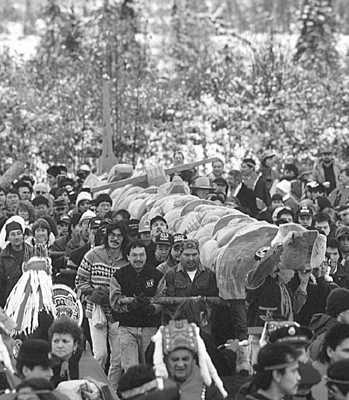
Nisga'a pole raising at Gitwinksihlkw (Canyon City) on the Nass R, 1992. Gary Fiegehen photo
- Indian Act:
- Crown- and federal government–imposed governance structures on First Peoples communities (e.g., band councils)
- Title, treaties, and land claims
- Nisga'a Treaty
- Haida Gwaii Strategic Land Use Decision
- Tsilhqot'in decision
Environmental, Political, and Economic Policies:
Sample topics:
- Stakeholders (e.g., First Peoples; industry and corporate leaders; local citizens; grassroots movements; special interest groups, including environmental organizations)
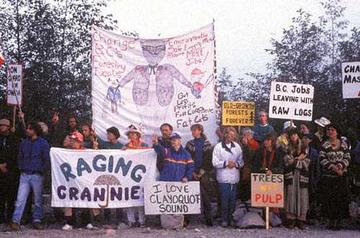
The Raging Grannies protesting logging in Clayoquot Sound, 1993. WCWC
Canadian Autonomy:
Sample topics:
- Canada (treaties with First Peoples)
Canadian Identities:
Sample topics:
- Immigration and multiculturalism:
- Cultural identities of subsequent generations (e.g., second-generation Japanese Canadian versus Canadian of Japanese descent versus Canadian)
- Japanese
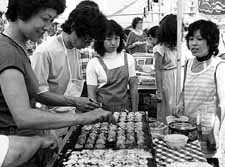
Cooking up delicacies at Oppenheimer Park, Vancouver, during the annual Powell Street Festival, 1981. Powell Street was the centre of the Japanese Canadian community in Vancouver before WWII. Rob Draper/Vancouver Sun
- Manifestations or representations:
- First Peoples arts, traditions, languages
- Northwest Coast Aboriginal Art
- Rock Art
- Aboriginal
- First Nations Languages
- First Nations of BC
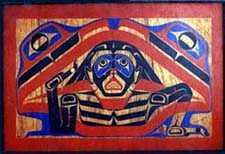
Man/frog transformation by Doug Cranmer, 1976. MOA Nb3.1483
- Place-based identities and sense of belonging (e.g., Haida Gwaii versus Queen Charlotte Islands; “up North” and “back East”; affinity for ocean air, wide-open spaces; spiritual ancestors)
Discriminatory Policies and Injustices in Canada and the World, including Residential Schools, the Head Tax, the Komagata Maru Incident, and Internments
Sample topics:
- National or ethnic discrimination:
- Chinese Immigration Act
- World War II internments (e.g., Japanese, Italian, German)
- Komagata Maru
- Indian Act (e.g., residential schools, voting rights, reserves and pass system, Sixties Scoop, and the White Paper)
- BC Residential Schools
- BC Aboriginal Rights
- BC Reserves
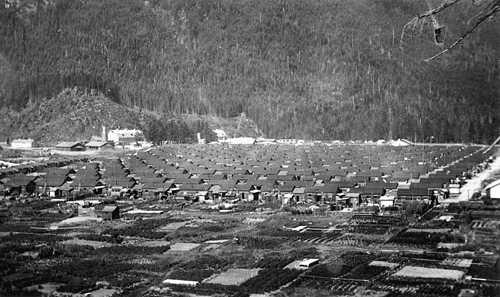
Japanese internment camp, Tashme, 1942. BC Archives E-09913